Supports cellular energy
Light absorbed by the mitochondria in your cells supports their production of energy (ATP), which is part of how tissue repairs and maintains itself.
Red Light Therapy
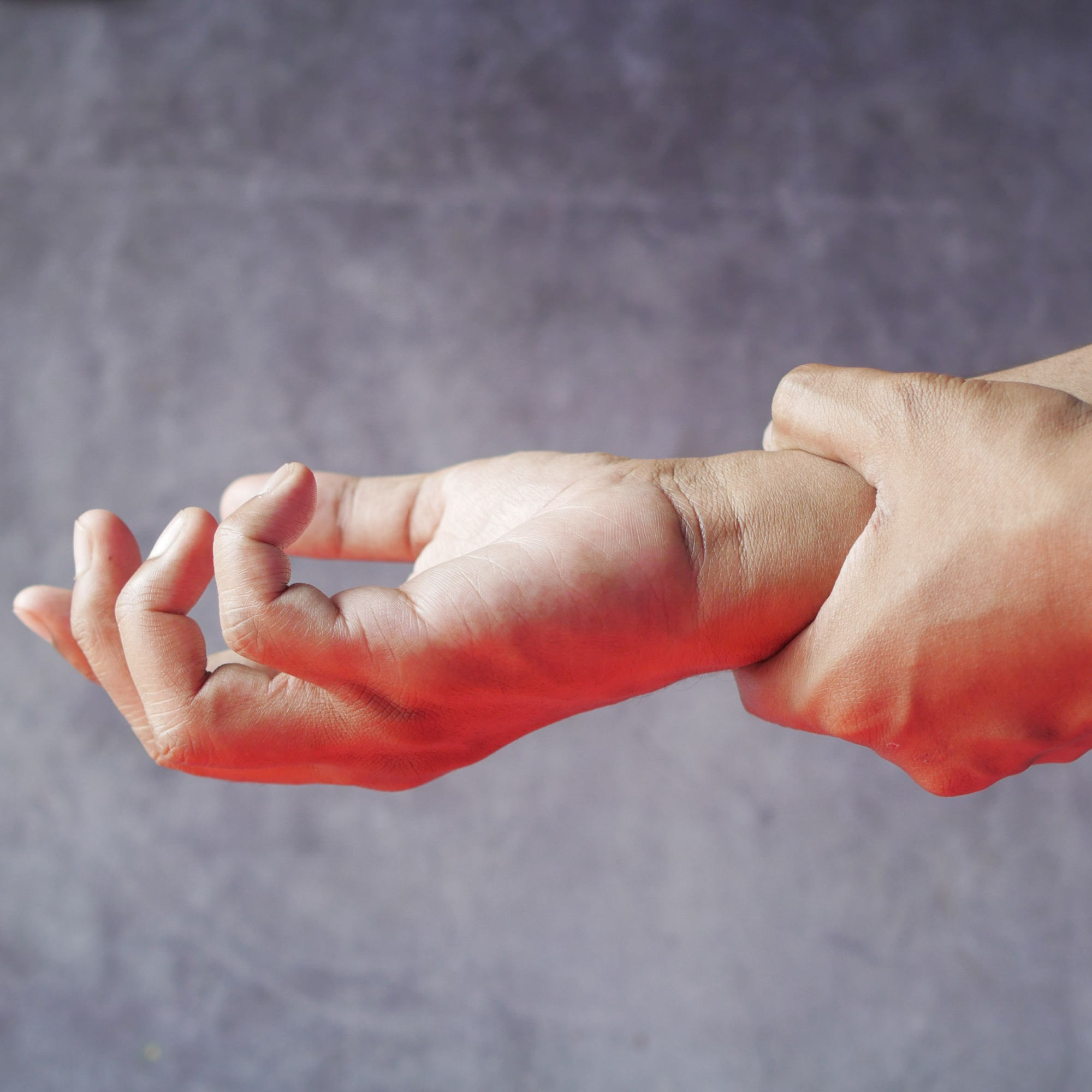
Non-invasive, drug-free support for painful joints and arthritic discomfort, working gradually over a course of short sessions to reach the tissue around the joint and encourage your body's own repair mechanisms.
Mechanism
Red light therapy (photobiomodulation) delivers specific wavelengths of red and near-infrared light into the skin and the tissue beneath it. Near-infrared wavelengths in particular reach deeper structures such as muscle, tendon, and the soft tissue around a joint, which is where arthritis discomfort tends to originate.
Light absorbed by the mitochondria in your cells supports their production of energy (ATP), which is part of how tissue repairs and maintains itself.
Local blood flow to the treated area is encouraged, bringing oxygen and nutrients to tissue that is working to recover.
The body's natural inflammatory response is supported rather than suppressed, relevant for the persistent, low-grade inflammation common in arthritic joints.
Evidence
Photobiomodulation has been studied for musculoskeletal pain, including knee osteoarthritis and other arthritic joints. The research points in a consistent direction worth understanding before you start:
We set realistic expectations from the first conversation. If we don't think red light therapy is likely to help your particular situation, we'll tell you plainly.
Process
We review the affected joint, your history, and your goals, then recommend a session frequency and an expected number of sessions.
You relax lying down in our ARRC LED ATP RFQ bed for roughly 10 to 20 minutes. Sessions are warm and comfortable, with no pain and no downtime.
We check in on your progress across the course and adjust the plan based on how the joint is responding.
A widely cited review of how red and near-infrared light stimulates skin healing and rejuvenation at the cellular level.
Read publication Red Light Therapy Laser TherapyReviews the evidence for LED phototherapy in wound healing, pain control, and skin rejuvenation when dosed correctly.
Read publication Red Light Therapy Lasers in Medical ScienceFound that photobiomodulation reduced inflammatory markers in osteoarthritis more effectively than NSAIDs or exercise alone.
Read publicationReady to try red light therapy for your joint pain?
Red light therapy is available for physician-referred chronic pain treatment and as an adjunct to XERF treatments.